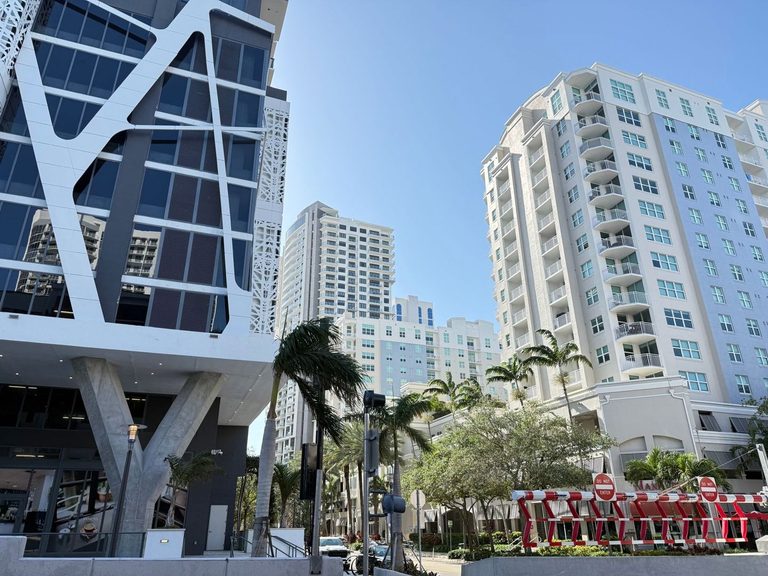

Anyone who owns commercial real estate in Florida should know that they can have their building checked and will most likely be able to reclassify some elements of the building at a faster rate of depreciation. This is a technique known as cost segregation, and there are Florida cost segregation specialists who can help commercial property owners get this strategy correct. Any commercial building can have hundreds or thousands of individual components that could be eligible for classification under accelerated depreciation.
This process could unlock significant amounts of capital much sooner than property owners might expect; let’s have a closer look at how it works.
Table of Contents
ToggleAn Engineering-Based Cost Segregation Study Is About More Than Checking Building Plans
Any serious cost segregation study is about far more than simply looking at the building plans and comparing things to an accounting ledger. Engineers can come in and compare the physical property to the construction documents and other elements.
There are a range of components that can then be treated differently for the purposes of accelerated depreciation, such as specialty plumbing, flooring, electrical systems and lighting. An engineering-backed cost segregation study in Florida provides a much stronger case.
Looking At The Accelerated Depreciation Numbers
Consider a Florida investor who acquires a nonresidential commercial property for $4,200,000, of which $700,000 is allocated to land, leaving a depreciable building basis of $3,500,000. The investor separately purchases $95,000 of furniture, fixtures and equipment. The property is placed in service in January.
Without a cost segregation study, the building is depreciated over 39 years and the first-year deduction under the mid-month convention is $86,135; the separately purchased FF&E receives 100% bonus depreciation of $95,000 whether or not a study is performed, for a total of $181,135.
With a study, $455,000 is reclassified to five-year personal property and $385,000 to 15-year land improvements, giving $840,000 of accelerated basis eligible for 100% bonus depreciation. The remaining $2,660,000 stays on the 39-year schedule and produces $65,463 in year one. Adding the $95,000 of FF&E, the first-year deduction is $1,000,463.
The study’s incremental contribution is $819,328, which at a 37% marginal federal rate defers roughly $303,151 of tax.
Property Improvements Can Create Opportunities
It is important for property owners to note that renovations and expansions to properties can also qualify for accelerated depreciation. This means that undertaking a remodel or renovation will mean that the area in question should be evaluated separately from the rest of the property.
Because of this, property improvements should be factored into a broader tax strategy at the planning, designing and budgeting stages.
Passive Activity Limits Still Apply
These deductions are not automatically usable.
Under IRC Sec. 469, rental real estate is generally a passive activity, and passive losses offset only passive income; unused losses are suspended and carried forward until the taxpayer has passive income or disposes of the activity in a fully taxable transaction.
A taxpayer who qualifies as a real estate professional under Sec. 469(c)(7) and materially participates may treat the losses as non-passive. Separately, a rental with an average guest stay of seven days or less is not a rental activity under Reg. Sec. 1.469-1T(e)(3)(ii)(A), so material participation alone can make the losses non-passive without real estate professional status.
Getting Depreciation Recapture Right
Accelerated depreciation is a deferral, not forgiveness.
On a taxable sale, depreciation claimed on the five- and 15-year property a study reclassifies is recaptured under IRC Sec. 1245 as ordinary income to the extent of depreciation taken, potentially at rates up to 37%, rather than the 25% maximum applying to unrecaptured Sec. 1250 gain on the building itself.
A study therefore shifts part of future gain from Sec. 1250 to Sec. 1245 treatment. The net benefit depends on the time value of the deferral and the expected holding period, and is generally weaker for property expected to be sold within a few years.
Understanding How Current Laws Play In
The One Big Beautiful Bill Act (P.L. 119-21), signed July 4, 2025, made the 100% first-year bonus depreciation rate under IRC Sec. 168(k) permanent for qualifying property acquired and placed in service on or after January 20, 2025. Before that change the rate was phasing down on a fixed schedule of 80%, 60%, 40%, 20% and then 0%.
Property acquired before January 20, 2025 remains subject to the phase-down percentage in effect at the time of acquisition.
The Corporate Add-Back Changes the Picture in Florida
Florida imposes no personal income tax, so an individual investor’s benefit is measured entirely at the federal level. C corporations are treated differently.
Florida requires an add-back of federal bonus depreciation for corporate income tax purposes, and the treatment of qualified improvement property is harsher than the standard add-back: QIP bonus depreciation added back does not qualify for the seven-year recovery mechanism available to other bonus depreciation add-backs, so the corporate-level deferral is lost rather than spread. Entity choice therefore materially changes the outcome in Florida.
Finishing Off
Undertaking a cost segregation study from an engineering angle can help to elucidate exactly which property components should be considered for accelerated depreciation and can provide a stronger case for such.