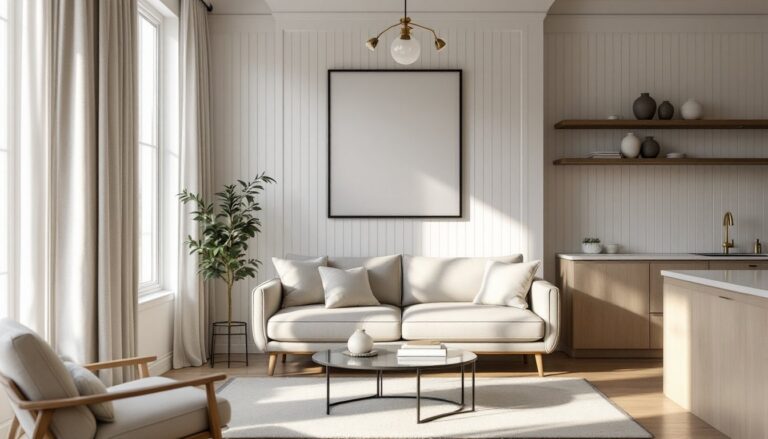

Small luxury homes prove that square footage doesn’t dictate sophistication. These compact residences, typically under 1,500 square feet, deliver high-end living through intentional design, premium materials, and smart spatial planning. Whether building new, renovating, or simply upgrading finishes, homeowners can achieve upscale aesthetics without sprawling floor plans. The key isn’t throwing money at every surface: it’s making strategic choices that layer quality, function, and visual impact into every square inch. This guide walks through the principles, features, and techniques that transform tight quarters into refined living spaces.
Table of Contents
ToggleKey Takeaways
- Small luxury homes under 1,500 square feet prove that refined living depends on strategic design and premium materials, not square footage.
- Quality surfaces matter most in compact spaces: choose wide-plank hardwood flooring, quartz or natural stone countertops, and solid hardware finishes that immediately elevate the home’s appearance.
- Smart space planning through open layouts with defined zones, taller ceilings (9–10 feet), and built-in storage maximizes functionality without cramped aesthetics.
- High-impact features like frameless walk-in showers, radiant floor heating, and statement lighting work beautifully in small luxury homes without overwhelming the space.
- Targeted upgrades—premium paint, trim upgrades, hardware swaps, and textured accent walls—deliver luxury appeal affordably without full renovations.
- Design unity across small luxury homes comes from limiting color palettes to 3–4 shades, choosing furniture with exposed legs, and using mirrors to amplify natural light.
What Defines a Small Luxury Home?
A small luxury home blends compact footprint with elevated finishes and thoughtful design. Size varies, but most fall between 800 and 1,500 square feet, small enough to minimize maintenance and energy costs, large enough to accommodate essential living zones.
Key characteristics include:
- Premium materials: Natural stone countertops, hardwood or engineered wood flooring (not laminate), and solid-core doors instead of hollow-core.
- Architectural detail: Crown molding, wainscoting, coffered ceilings, or custom millwork that adds depth.
- High-performance systems: Energy-efficient HVAC, smart home integration, and superior insulation (R-19 walls, R-38+ attics in most climates).
- Curated layouts: Every room serves multiple functions without feeling cramped. Open plans work, but defined zones prevent the “hallway with furniture” effect.
Luxury in small spaces isn’t about mimicking a mansion. It’s about eliminating the cheap and generic. A 900-square-foot home with quartz counters, wide-plank oak floors, and integrated LED lighting feels more refined than a 2,500-square-foot builder-grade house with vinyl plank and plastic light fixtures.
Design Principles for Luxurious Small Spaces
Quality Over Quantity: Choosing Premium Materials
In compact homes, every surface gets noticed. Budget shifts from quantity to quality.
Flooring: Wide-plank hardwood (5″ or wider) or high-quality engineered wood creates visual continuity. Avoid mixing too many flooring types, one material flowing through main living areas makes spaces feel larger. For wet areas, 12″ x 24″ porcelain tile in a stacked bond pattern elongates sight lines better than small mosaics.
Countertops: Quartz offers durability and consistent patterning: natural stone like marble or granite adds unique character but requires sealing. Standard thickness is 3 cm (1.25″), but a 2 cm (0.75″) slab with a mitered edge can deliver the look for less weight and cost, helpful in condos with load restrictions.
Cabinetry: Plywood box construction with dovetail drawers outlasts particle board. Soft-close hinges and full-extension drawer slides are non-negotiable for a high-end feel. Paint-grade MDF doors work fine if finished properly: stain-grade needs solid wood or quality veneer.
Hardware and fixtures: Swapping builder-grade brushed nickel for solid brass, matte black, or polished chrome faucets and drawer pulls makes an immediate impact. Stick to one or two finishes throughout the home for cohesion.
Smart Space Planning and Layout Optimization
Every square foot must earn its keep. Effective layouts eliminate wasted circulation space and create purposeful zones.
Open plans with definition: Removing walls between kitchen, dining, and living works in small homes, but use furniture arrangement, area rugs (minimum 8′ x 10′ for living rooms), and ceiling-mounted light fixtures to delineate zones. A peninsula or island provides a natural boundary without blocking sightlines.
Vertical thinking: Standard ceiling height is 8 feet, but 9- or 10-foot ceilings add volume without expanding the footprint. If building or renovating, taller ceilings cost minimally more in framing but require longer drywall sheets and potentially taller doors (consider 8-foot doors instead of standard 6’8″).
Built-ins and multipurpose furniture: Custom or semi-custom built-in shelving, window seats with storage, and Murphy beds reclaim floor space. A 15-inch-deep bookshelf along a hallway adds storage without protruding awkwardly.
Sightlines and flow: Arrange the entry so the first view leads to the most appealing space, a window, fireplace, or luxury homes interior focal wall, not a blank partition. Standard door swing is 32 inches, but a 36-inch door improves flow and accessibility (required for accessible design per ICC A117.1).
High-End Features That Work in Small Footprints
Certain luxury features scale beautifully into compact homes without overwhelming the space.
High-efficiency HVAC and radiant heat: A ducted mini-split system or a compact 95%+ AFUE furnace with a smart thermostat delivers comfort quietly. Radiant floor heating (electric mats under tile or engineered wood, or hydronic in a slab) eliminates bulky radiators and provides even warmth, especially appealing in bathrooms.
Statement lighting: A single sculptural pendant or chandelier draws the eye up and adds drama. In kitchens, under-cabinet LED strips (look for CRI 90+ for accurate color rendering) provide task light and ambiance. Dimmer switches (compatible with LED loads) are essential for layering light.
Walk-in showers with frameless glass: Skip the tub in a small primary bath and invest in a curbless or low-threshold shower with 1/2-inch tempered glass panels. Use 12″ x 24″ wall tile in a vertical stack to emphasize height. A rainfall showerhead and a handheld on a slide bar offer flexibility without requiring a huge footprint (a 36″ x 48″ shower is workable: 48″ x 60″ is more comfortable).
Custom millwork and paneling: Board-and-batten, shiplap (actual 1×6 or 1×8 pine or MDF, not peel-and-stick), or picture-frame molding on accent walls adds texture and architectural interest. These treatments are achievable DIY projects with a miter saw, level, stud finder, and finish nailer.
Smart home integration: Centralized lighting, climate, and security control via a single app or voice assistant streamlines daily routines. Use Wi-Fi smart switches instead of replacing every bulb to keep costs reasonable.
High-performance windows: Low-E dual-pane or triple-pane glass improves energy efficiency and sound insulation, critical in urban settings where luxury city homes face street noise. U-factor below 0.30 and SHGC (Solar Heat Gain Coefficient) around 0.25–0.35 work well in most climates: adjust based on local conditions and orientation.
Interior Design Strategies for Elevated Small Living
Design choices either amplify or shrink perceived space. Strategic color, texture, and furnishings control the visual narrative.
Color palette: Light, neutral walls (whites, soft grays, warm beiges) reflect light and recede visually. That doesn’t mean sterile, layering three to four shades of the same color family (e.g., greige walls, linen sofa, charcoal accent pillows, cream rug) adds depth. Bold, saturated colors work as accents (a navy vanity, emerald green backsplash) but use sparingly.
Scale and proportion: Oversized furniture crowds small rooms. Choose pieces with exposed legs (raising them off the floor creates breathing room) and avoid bulky, overstuffed sectionals. A 72- to 84-inch sofa typically fits better than a sprawling 100-inch model. Glass or acrylic coffee tables and open-back dining chairs maintain sightlines.
Mirrors and reflective surfaces: A large mirror (minimum 30″ x 40″) opposite a window doubles natural light. Glossy tile, polished countertops, and metallic accents bounce light around. Avoid overuse, too much reflection feels cold.
Texture over clutter: In place of excessive decor, introduce texture through materials: a linen headboard, wool area rug, velvet throw pillows, or matte ceramic vases. Fewer, higher-quality pieces read as intentional curation, not budget compromise.
Window treatments: Floor-to-ceiling drapes (mount rods just below the ceiling, not at the window frame) elongate walls. Choose fabrics that puddle slightly on the floor for a tailored look, or hem to just skim the floor for clean lines. Cellular shades offer energy efficiency and a streamlined profile when privacy is needed.
Many examples of small luxury homes use monochromatic schemes and carefully edited furnishings to maintain visual calm. When designing luxury homes interior layouts, professionals often limit color palettes and material types to three or four throughout the home.
Budget-Friendly Ways to Add Luxury Touches
Luxury doesn’t require unlimited funds. Targeted upgrades deliver disproportionate impact.
Paint and trim: A fresh coat of premium paint (brands like Benjamin Moore Aura or Sherwin-Williams Emerald have better coverage and durability than builder-grade) transforms a space for roughly $50–$70 per gallon (covers ~400 sq ft). Adding 3.5- to 5.5-inch baseboards and 2.5- to 3.5-inch casing (versus standard 2.25″) gives walls a more substantial, finished appearance. MDF trim is paintable and costs less than solid wood: install with a finish nailer and fill nail holes with lightweight spackle before priming.
Upgrade lighting fixtures: Swapping out builder-grade fixtures for stylish pendants, sconces, or flush-mounts is a high-impact, DIY-friendly project. Turn off power at the breaker (verify with a non-contact voltage tester), and follow manufacturer wiring instructions. Fixtures range from $75 to $300+, but even mid-priced options elevate a room.
Luxury vinyl plank (LVP) or engineered wood: If solid hardwood isn’t in the budget, 6- to 8-inch-wide LVP with an attached underlayment and a 20-mil wear layer mimics wood convincingly and installs as a floating floor (no adhesive, no nails). Expect $3–$6 per square foot installed. Engineered hardwood (real wood veneer over plywood core) runs $5–$10 per square foot and can be refinished once or twice.
Hardware and fixture swaps: Replacing cabinet pulls, hinges, doorknobs, and faucet fixtures costs a few hundred dollars but updates the entire aesthetic. Brushed brass, matte black, or polished nickel feel current and high-end. Use a template or drilling jig to ensure consistent hole placement.
Accent walls and DIY paneling: A feature wall with board-and-batten, vertical shiplap, or picture molding adds architectural interest for the cost of materials (roughly $100–$200 for a 10′ x 10′ wall in MDF). Cut with a miter saw, attach to studs with construction adhesive and finish nails, then caulk seams and paint.
Textiles and soft goods: High-thread-count bedding, linen or velvet throw pillows, and a quality area rug (look for wool or wool-blend instead of polyester) bring tactile luxury without construction. Layer textures for a curated, designer look.
Open shelving in kitchens: Removing upper cabinet doors and installing 1.5- to 2-inch-thick floating shelves (use heavy-duty brackets rated for at least 50 lbs per shelf) creates an open, airy feel and showcases dishware. This works best when you’re disciplined about what goes on display.
Several examples of compact luxury demonstrate that strategic material choices and finishes matter more than sheer size. For renters or budget-conscious owners, small-space design strategies often focus on removable upgrades like lighting, paint, and furnishings that deliver impact without permanent modifications.
Small luxury homes succeed when every decision, from floor finish to cabinet hardware, aligns with a clear vision of quality and restraint. Compact doesn’t mean compromise: it means intention. With smart material selection, efficient layouts, and a few standout features, even a modest footprint can deliver the comfort, beauty, and refinement typically reserved for much larger residences.