Luxury vinyl plank (LVP) flooring has become a go-to choice for homeowners looking for the look of hardwood without the maintenance headaches or price tag. It’s waterproof, durable, and available in styles that can fool even a seasoned contractor. But what does it actually cost to install? Whether you’re planning to DIY or hire a pro, understanding the price breakdown helps you budget realistically and avoid surprise expenses. This guide breaks down material costs, labor rates, hidden fees, and everything in between so you can make an well-informed choice for your flooring project.
Table of Contents
ToggleKey Takeaways
- Luxury vinyl plank flooring installation costs between $3.50 and $12.00 per square foot installed, with mid-tier options averaging $6 to $8 per square foot for professional work.
- DIY floating floor installation can cut total costs nearly in half, saving hundreds on labor while requiring only 1–2 days and basic tools for simple rectangular rooms.
- Material costs vary dramatically by quality tier, from budget-friendly $1.50–$3.00 per square foot to premium rigid-core planks at $6.00–$10.00+ per square foot with superior durability.
- Subfloor prep, underlayment, removal of existing flooring, and moisture mitigation are hidden costs that can add 15–25% to your project budget if not planned upfront.
- Professional installation becomes essential for complex layouts, radiant heat systems, or subfloor leveling to avoid costly mistakes and warranty issues with luxury vinyl plank flooring.
- Regional differences significantly impact pricing, with urban markets like San Francisco and New York running 20–30% higher than Midwest and Southern areas.
Average Cost to Install Luxury Vinyl Plank Flooring
As of 2026, most homeowners spend between $3.50 and $12.00 per square foot for LVP flooring installation, including materials and labor. For a standard 200-square-foot room, that translates to roughly $700 to $2,400.
The wide range reflects differences in product quality, installation complexity, and regional labor rates. Budget-friendly builder-grade LVP at the lower end might cost $3.50 to $5.00 per square foot installed, while premium rigid-core planks with attached underlayment and designer finishes can push $10 to $12 per square foot.
Nationwide, the median installed cost hovers around $6 to $8 per square foot for mid-tier products with professional installation. DIY installations can cut total costs nearly in half, but more on that later.
Keep in mind that costs vary significantly by region. Urban markets like San Francisco, New York, and Seattle tend to run 20–30% higher due to labor rates, while Midwest and Southern markets often come in below the national average.
Cost Breakdown: Materials vs. Labor
Understanding where your money goes helps you decide where to splurge and where to save.
Material Costs by Quality Tier
LVP pricing is all about thickness, wear layer, and core construction. Here’s what to expect per square foot:
- Budget tier ($1.50–$3.00/sq ft): Thin wear layers (6–12 mil), flexible vinyl core, limited texture detail. Fine for low-traffic areas like bedrooms or guest rooms, but won’t hold up in kitchens or entryways.
- Mid-tier ($3.00–$6.00/sq ft): 12–20 mil wear layers, rigid SPC (stone polymer composite) or WPC (wood polymer composite) cores, better dimensional stability, and realistic embossing. This is the sweet spot for most homes.
- Premium tier ($6.00–$10.00+/sq ft): 20+ mil commercial-grade wear layers, rigid cores with sound-dampening or antimicrobial coatings, hand-scraped textures, and often integrated underlayment. Built for high-traffic spaces and long-term durability.
Don’t forget underlayment if your product doesn’t include it. Expect to add $0.50 to $1.50 per square foot for foam or cork underlayment, which reduces noise and smooths minor subfloor imperfections.
Professional Installation Labor Costs
Labor typically runs $2.00 to $5.00 per square foot, depending on your location and the installer’s experience. Flat, empty rooms with minimal cuts cost less: spaces with intricate layouts, stairs, or existing flooring removal cost more.
Some installers charge a flat day rate ($300–$600/day) instead of per square foot, especially for small jobs. Always get multiple quotes and confirm what’s included, removal, disposal, underlayment installation, and trim work can add up fast.
Most pros also charge extra for subfloor prep. If your concrete slab isn’t level within 3/16 inch over 10 feet (a common LVP requirement), expect to pay for self-leveling compound at $1.50 to $3.00 per square foot.
Factors That Affect LVP Installation Pricing
Several variables can push your project above or below the averages.
Room size and layout: Larger, open spaces are faster and cheaper per square foot to install. Small rooms, closets, or areas with lots of corners and angles require more cuts and waste, driving up labor and material costs by 10–20%.
Subfloor condition: LVP needs a smooth, clean, and dry surface. Damaged plywood, uneven concrete, or moisture issues require remediation. Replacing rotted underlayment or installing a vapor barrier can add $1 to $4 per square foot.
Removal of existing flooring: Pulling up old carpet, tile, or laminate adds time and disposal fees. Budget $1 to $2 per square foot for removal, more if you’re dealing with glued-down sheet vinyl or multiple layers.
Installation method: Click-lock floating floors are the fastest and cheapest to install. Glue-down LVP costs more in labor and materials (adhesive runs $0.50 to $1.00 per square foot) but offers superior stability in high-moisture areas.
Transitions and trim: New baseboards, quarter-round, or T-molding at doorways and transitions can add $2 to $6 per linear foot, depending on material and finish.
Geographic location: Labor in major metros costs significantly more than in rural areas. According to vinyl flooring cost data, regional variations can swing total project costs by 25% or more.
DIY vs. Professional Installation: Cost Comparison
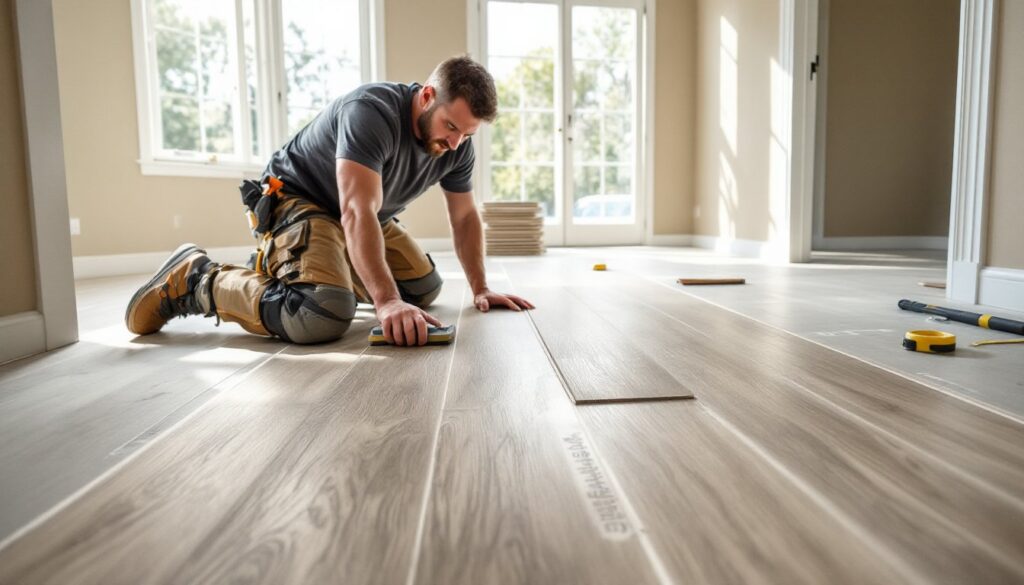
LVP is one of the most DIY-friendly flooring options, especially click-lock floating planks. If you’re comfortable with basic tools and can follow instructions, you can save a chunk of change.
DIY costs: You’ll pay only for materials, underlayment, and a few basic tools if you don’t already own them. A 200-square-foot room with mid-tier LVP might run $600 to $1,200 in materials. Add $50 to $150 for a pull bar, tapping block, utility knife, and a straight edge if you’re starting from scratch.
Time investment: Plan on 1–2 days for a typical room, including subfloor prep and acclimation time (let planks sit in the room for 48 hours before install). Your first project will take longer than subsequent ones.
Professional installation costs: For the same 200-square-foot room, expect $1,000 to $2,400 installed, including labor, materials, and underlayment. Pros work faster, handle subfloor issues confidently, and usually warranty their work for a year or more.
When to hire a pro: If your subfloor needs leveling, you’re installing over radiant heat, or you’re dealing with stairs or tile transitions, professional installation is worth it. Mistakes with glue-down installations or improper acclimation can lead to buckling, gaps, or voided manufacturer warranties.
When to DIY: Floating floors in simple rectangular rooms with solid subfloors are perfect DIY projects. Tools required are minimal, and most manufacturers provide detailed installation guides. Just don’t skip the prep work, clean, level subfloors are non-negotiable.
Hidden Costs and Additional Expenses to Budget For
Even with careful planning, a few costs catch homeowners off guard.
Subfloor repairs: Squeaky floors, water damage, or sagging joists need fixing before LVP goes down. Sistering joists or replacing damaged plywood can add $500 to $2,000 depending on severity.
Moisture mitigation: Concrete slabs can wick moisture through LVP, causing adhesive failure or mold. A vapor barrier or moisture-blocking primer costs $0.75 to $2.00 per square foot but is essential in basements or slab-on-grade installs.
Furniture moving and storage: Many installers don’t move heavy furniture. Budget $100 to $300 for professional movers or plan to clear rooms yourself.
Door trimming: LVP adds thickness to your floor. Doors may need to be trimmed to clear the new surface. An undercut saw or jamb saw runs about $50 to $100 if you DIY, or $10 to $25 per door if your installer handles it.
Disposal fees: Removing old flooring often involves dump fees, especially for tile or carpet with padding. Some installers include this: others charge $50 to $150 extra.
HVAC register and trim adjustments: Floor vents, toilet flanges, and trim pieces may need to be raised or replaced to match the new floor height. Plan for $50 to $200 in miscellaneous hardware.
According to LVP installation cost breakdowns, these add-ons can push total project costs 15–25% above initial estimates if not planned for upfront.
Safety note: If you’re removing old sheet vinyl or tile, test for asbestos before cutting or scraping. Homes built before 1980 often contain asbestos-backed flooring. Professional abatement runs $1,500 to $3,000+ but is legally required in many jurisdictions.
For more detailed renovation budgeting tools and contractor resources, home improvement cost guides to compare project estimates in your area.